Time is on Kim Fournais’s mind as he has just stepped down as chief executive officer of the bank he founded in 1992 with €70,000. The venture consumed every day of his working life since, as he endured long days, survived market panics and weathered disruptive cycles, from the evolution of the internet in the 1990s to the global financial crisis in 2008.
“You can only spend your time once as time is the only resource we have as humans and we don’t know how much we have,” says the founder and former CEO of Danish lender Saxo Bank.
The decision to hand over the reins after leading the bank for over three decades is a momentous one for Fournais, who acknowledges he considered it for a number of years but could not find the right circumstances until now.
Career history: Kim Fournais
2026: Chair, Saxo Bank
1992: Founder and CEO, Saxo Bank
Two factors underpin his decision: a desire to spend more time with his family and other passions, combined with the conclusion of a commercial deal between Saxo and Swiss private bank J. Safra Sarasin Group.
The Swiss lender completed its acquisition of a majority stake in Saxo Bank at the start of March that saw Fournais step down as CEO and become chair of the group. As part of the deal, Fournais retains a 28 per cent stake in Saxo Bank while Daniel Belfer, formerly CEO of Bank J. Safra Sarasin, replaces Fournais. A number of other senior management changes have also been made as part of this arrangement. The deal gives the Swiss wealth manager access to an institution known for its cutting-edge technology.
“Getting some fresh blood into the CEO role makes sense and there is a very good legacy here that I am confident will thrive,” he says.
As chair Fournais will continue to meet key clients and give his opinion on strategic decisions at Saxo but is determined not to interfere with the new leadership.
“I am very comfortable with Daniel Belfer and the wider team taking over, and the completion of the Safra acquisition, as all the boxes are ticked for things to move forward,” he says.
The four customer segments of the bank will remain the same, including retail investors and more sophisticated professional investors who trade derivatives. On the institutional side there are financial companies who use Saxo Bank’s banking-as-a-service technology and finally external asset managers who service independent financial advisers.
According to Fournais, Saxo Bank has created a “very scalable machine” where people can invest, trade and save for their futures. In the first half of 2025, the bank reported pre-tax profits of DKr748mn ($116mn); over the previous full financial year, pre-tax profits were DKr1.3bn, a figure three times that reported in 2023. It has 1.4mn clients and €117bn in client assets.
A recent note from S&P Global Ratings gives the lender an A- rating and says that the Safra acquisition could attract new business for Saxo and therefore increase its broker fees.
Building a culture of accountability
Fournais’s search for the right investors and leaders to take the baton from him reveal his beliefs on what makes for successful bank culture and the tough decisions a CEO inevitably has to make.
“Unless you can create people and culture that is aligned with the key objective of what you want to do then it won’t fly,” he says.
He adds that it took him years to understand how deeply a bank’s back-office and product offering to clients are secondary to the quality of people that present them.
Fournais learned this truth the hard way as the work culture at Saxo Bank has evolved with various shareholders and has not always been as strong as it is now.
There was a period a decade ago when it suffered from a mindset where different departments did not take responsibility for what they were doing.
He had to change 60 per cent of the bank’s staff over a two- to three-year period and that can be especially hard if longstanding colleagues have become friends.
“Being friends puts even a higher discipline on behaviour because if you are seen to have favourites [as a leader] that is something that can undermine a good culture,” he says.
“Making the hard choices at times is the right thing to do and you cannot run a business just on being friends.”
And while on reflection there are decisions he would have taken differently, he insists it is the job of any leader to actually make choices.
“There are many people that ruminate and end up doing nothing, which is pretty much always the worst solution,” he says.
Fournais also observes he is fortunate to have strong mentors, namely Henrik Normann who headed up Danske Bank’s market business and sits on Saxo Bank’s board.
“He always tells the truth and has a lot of experience and is quite an inspiring person,” he says.
However there is a balance to be struck, as any CEO wants relations between staff to be as harmonious as possible to help foster a team spirit.
Nonetheless, for Fournais the underlying principle of any successful culture is accountability that relates to the world outside banking.
“This is the cornerstone of building a successful organisation, a successful country or good family and friendships and we need more of it [accountability] in this crazy world,” he says.
“There are too many examples today where people want something but they complain and blame others for their predicament.
“It takes many years of hard work to build great things and you can tear it all down with a bump, accident or bad behaviour.”
Navigating populism
There has just been an election in Denmark (March 24) and Fournais laments the “hyper populist politicians” within the country who he claims “are doing the wrong things for the wrong reasons” for short-term gain that will “create havoc” longer term.
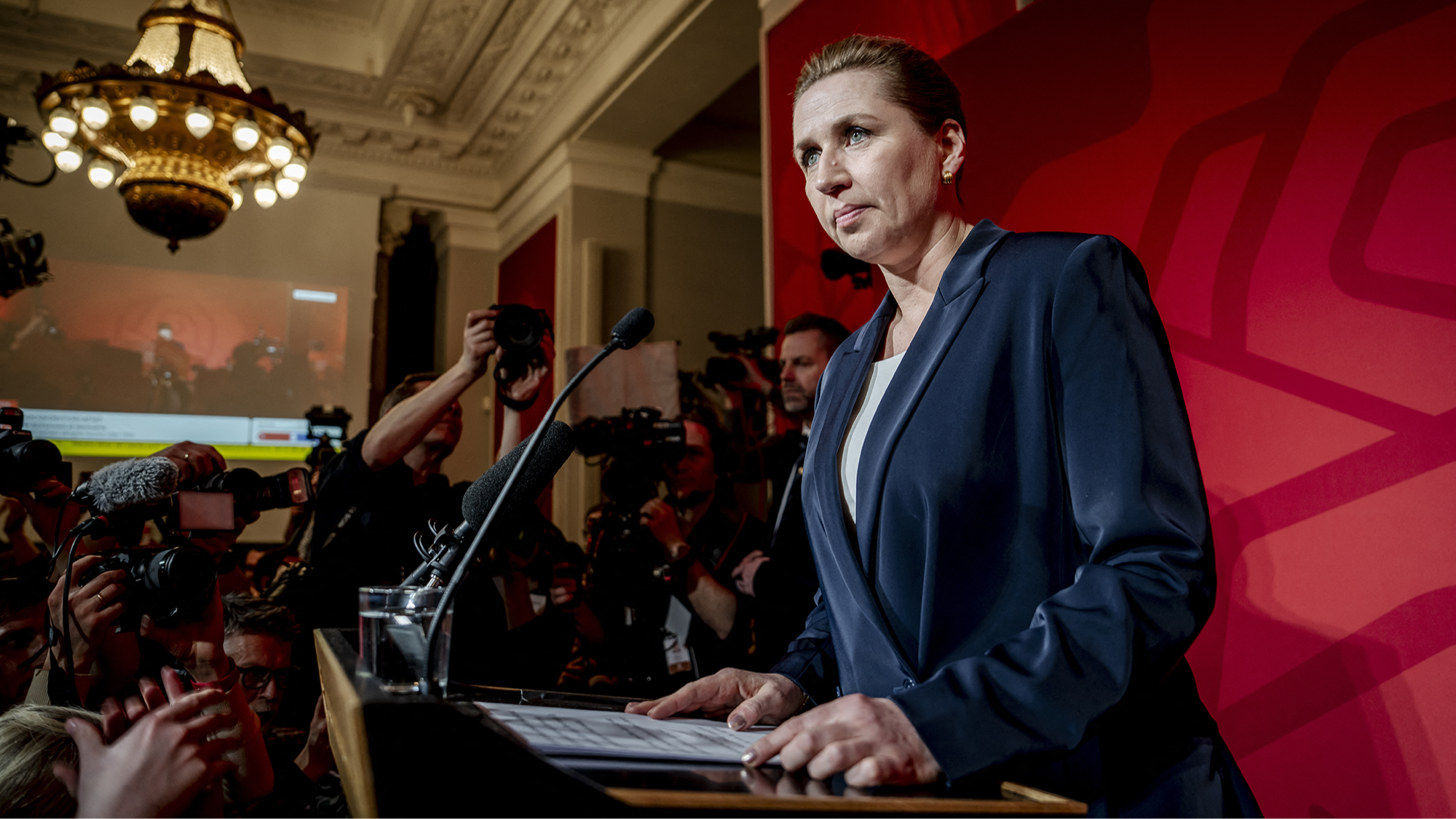
In the election, Danish Prime Minister Mette Frederiksen’s Social Democrat party had its worst election result since 1903 as the country’s parliamentary vote ended without a clear-cut winner.
Her leftwing bloc won 84 seats in the Danish legislature, ahead of the rightwing grouping with 77 seats.
“We need to do a much better job [in this political context] of explaining the value we create and why we are important,” Fournais says.
He argues that it is very complicated to run a bank in Denmark as there are so many rules and populists are stoking false divisions that distract from real problems.
“What people want is for their children to have a good school, to be safe and have opportunities but that is not the common focus as it is always so political,” he says.
He is also convinced the EU needs to get its act together and fast. “We need growth in Europe now; we need to help each other; we need to create financial stability. And we need to promote innovation and start up companies.”
Fournais’s advice for young people who want to work in banking is to get ahead of artificial intelligence.
“I believe it will change a lot of things and any financial institution that does not embed it and figure out how to deliver better products will have a problem,” he says.
Freedom at 30,000 feet
With his additional spare time Fournais is keen to focus more on sports, being in nature and other large investments. He owns land in Majorca in the Serra de Tramuntana mountain range where he is building hotels, regenerative farms and restoring old buildings. And he also owns Denmark’s Vejrø island, a project he started 20 years ago which is focused on sustainability.
Fournais is also a pilot and flies a Pilatus PC-12 turboprop and a small Honda jet. “I love flying as it gives an immense amount of freedom and the Honda jet is a very practical device as it is cheap to fly and we have used it for client meetings,” he says.
As Fournais approaches his 60th birthday in June he will remain incredibly active and views his 33 years at Saxo Bank as largely a success. He took it from a brokerage with only a few employees to 2,400 people in financial centres across the world that uses technology to differentiate itself.
“Overall I am pretty happy as you cannot name many CEOs who founded their own company and have run it for as long as I have. As Frank Sinatra sang: ‘I did it my way’.”