Key Takeaways
- The best travel illness prevention is doing the basics: hydrating, sleeping enough, handwashing, and limiting exposure to germs in crowded spaces.
- Staying healthy on a cruise may require extra precautions because stomach viruses can spread quickly in shared dining and living areas.
- Products marketed as immune support for traveling, such as Emergen-C or Airborne, may support overall wellness but cannot guarantee illness prevention.
- Hantavirus is rarely transmitted from person to person, but travelers staying in dusty cabins, campsites, or rodent-infested areas should understand the risks and symptoms.
From headlines about hantavirus to the reality of packed airports and cruise ships, many travelers are wondering the same thing: How can I avoid getting sick when on a trip?
“While hantavirus transmission between people remains rare, it’s a reminder that travel health risks can range from common colds to less familiar infections—and that preparation matters,” said Infectious Disease Physician Angela Branche, MD.
Here’s what to consider before your next trip, plus expert-backed tips to help you stay healthy.
Why Travel Can Increase Your Risk of Getting Sick
While travel itself doesn’t weaken your immune system, the stressors that often come with vacations can increase your odds of getting sick. Changes in sleep, stress, hydration, and nutrition during vacation can increase exposure to germs while making your body less prepared to fight them off.
International travel can pose additional risks, such as viruses, bacteria, and unsafe food and water that our bodies are not used to.
The Centers for Disease Control and Prevention keeps an updated report on current Ebola cases and locations. Stay up to date and reach out to your primary care provider before traveling out of the country.
What Is Hantavirus? What Travelers Should Know
Hantavirus is a rare virus with only a small number of reported cases in the U.S. each year.
How do you get hantavirus?
Most infections occur after exposure to rodent droppings or urine, often from time spent in dusty cabins, sheds, or campsites, or in hiking, camping, or hunting areas with rodents.
Human-to-human spread is extremely rare, Dr. Branche explains. “You can’t get it from just passing somebody in the hall or breathing the same air as them. Only one strain typically detected in South America is known to cause human-to-human transmission, and that requires significant exposure to infected bodily fluids.”
Hantavirus symptoms
- Fever
- Fatigue
- Muscle aches
- Cough
- Shortness of breath or pneumonia
Preventing Hantavirus
- Avoid contact with rodent droppings
- Wear a mask when cleaning dusty spaces
- Store food safely while camping
- Keep tents and cabins clean
How to Stay Healthy on a Plane
Planes are enclosed spaces with lots of frequently touched surfaces, making healthy travel habits important. Try these tips next time you hop on a flight:
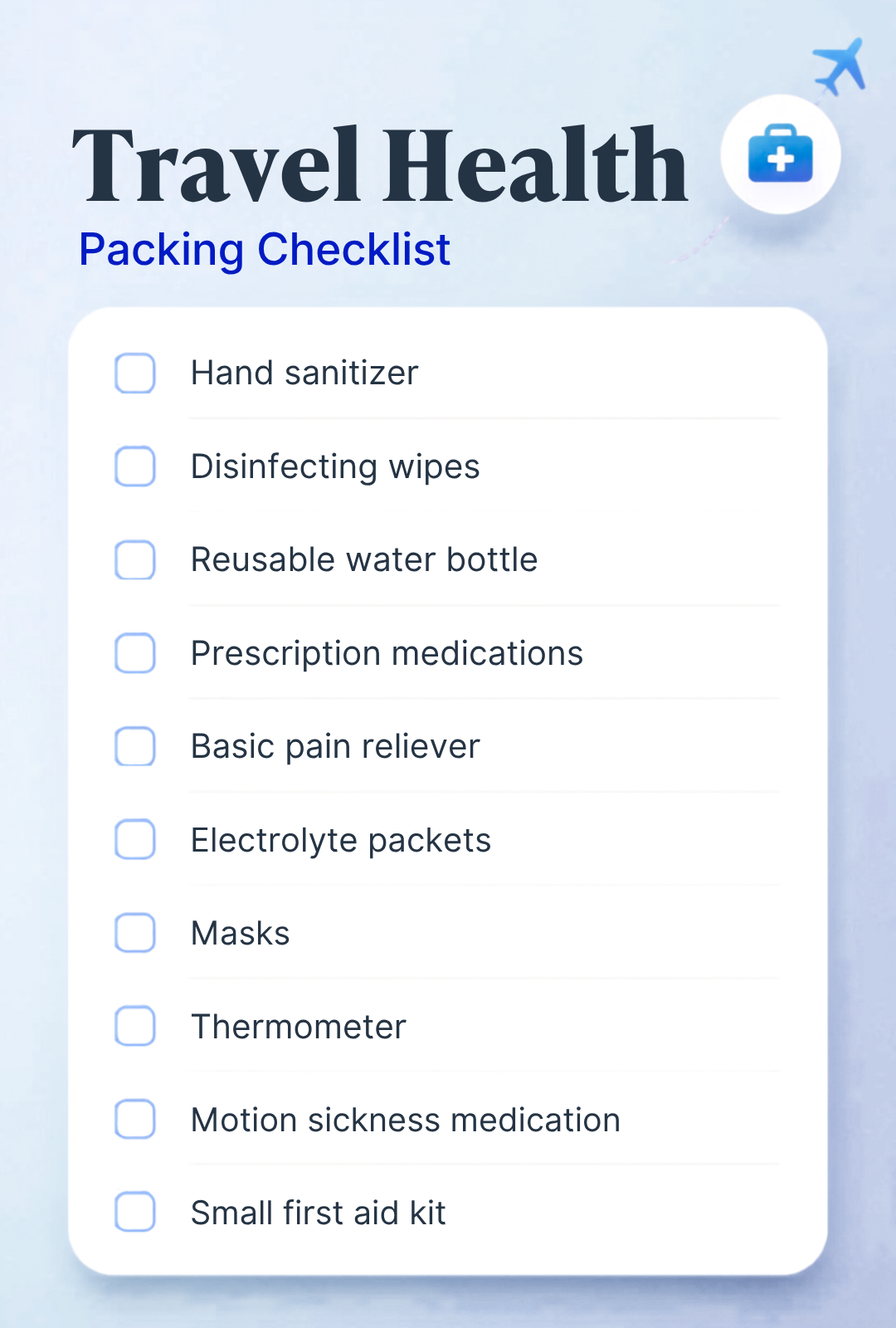
- Hydrate Before and During Your Flight: Drink water before and during your flight, limit alcohol and caffeine, and consider packing electrolyte packets.
- Be Aware of High-Touch Surfaces: Bring hand sanitizer and/or disinfectant wipes to clean tray tables, seatbelt buckles, screens, and armrests.
Pro tip: consider bringing lotion, too, as dry skin can lead to small open cuts.
- Sleep Matters More Than You Think: It plays a huge role in immune function. Early flights, jet lag, and travel stress, which interrupt your sleep, can all make it harder for your body to recover and fight off illness.
Staying Healthy on a Cruise Ship
Illnesses, especially norovirus, spread more easily on cruise ships due to close quarters, shared dining, and large groups of travelers.
- Shared buffets and dining areas
- Close living quarters
- Lots of frequently touched surfaces
- Infrequent handwashing
Reminder: Washing your hands with soap and water is more effective than hand sanitizer in preventing norovirus.
Other ways to stay healthy on a cruise:
- Avoid food that has been sitting out too long
- Stay hydrated, especially in hot climates
- Be cautious with food and water sources during excursions (bring bottled water when possible)
Don’t ignore symptoms. If you develop vomiting, diarrhea, fever, or respiratory symptoms onboard, limit your contact with others, report symptoms to cruise medical staff, and focus on hydration and rest.
Do Supplements Like Emergen-C or Airborne Actually Help?
Many people pack immune-support supplements, such as Emergen-C or Airborne, when they travel. But do they actually work? While some supplements may help support normal immune function, no supplement can “guarantee” illness prevention.
“There’s no magic supplement that prevents illness during travel, but healthy habits before and during your trip can make a meaningful difference.”
The best evidence-based strategies for immune support while traveling are still sleep, hydration, nutrition, and handwashing.
Get Care Now
When you or a loved one needs care, our providers are here—day or night, for every level of need. Whether it’s in person or virtual, get the care you need, when and where you need it.