Recipe for Disaster is Slate’s column about the things recipes get wrong—and how to fix them. If you’ve noticed a recipe annoyance, absurdity, or outright lie, file your complaint here and we will investigate!
For me, garlic is an intuitive ingredient. Like kosher salt and freshly ground black pepper, recipes should label it “to taste.” I prefer my pasta sauces, dressings, curries, compound butters, marinades, stews, and stir fries to be jacked up on the stuff. So when a recipe calls for two cloves of garlic, I have a good laugh.
But then again, maybe we’re actually better off using less, because people everywhere are having a hard time finding good garlic these days. Garlic, it turns out, is a very inconsistent ingredient. Sometimes the cloves are tiny, sometimes the cloves are huge. Sometimes the only thing left at the grocery is a bulb that’s sprouted too much, with a small green shoot peering out from the top. Very often they arrive with blemishes, dents, and rotten sections that need to be removed. All of this affects a garlic’s potency and pungency. In short, garlic throws up a range of obstacles for the home cook, and it’s time that recipes start giving it far more consideration than “two cloves, minced” in their instructions.
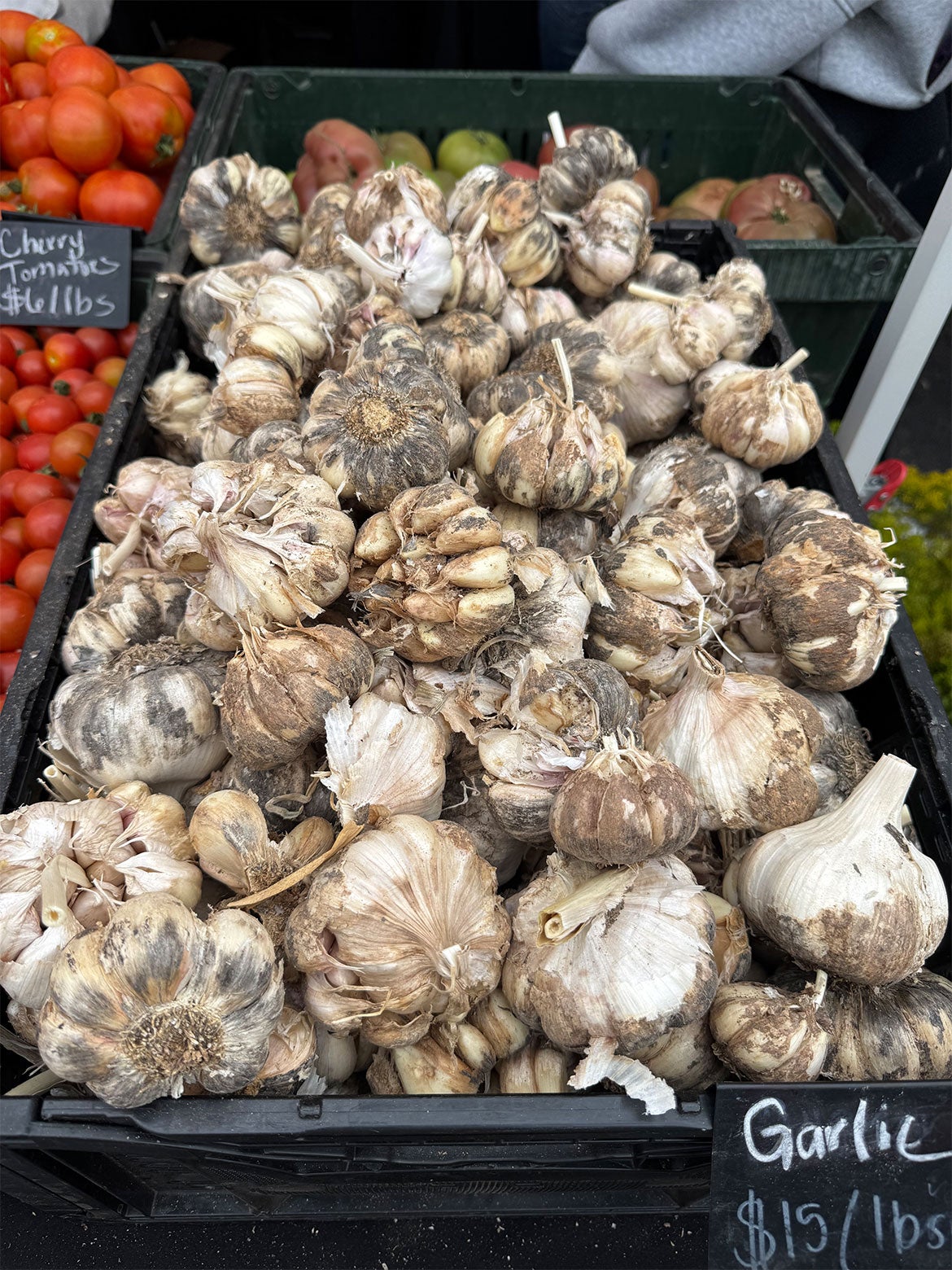
The heart of the problem is this: We don’t tend to think of garlic as seasonal, but it is. Just like other vegetables—peas, ramps, tomatoes, cabbage, and corn—garlic is much better in season, when it arrives in the summer with freshly picked bulbs that are plump, clean, and full of vigorous flavor. They are then cured for a few weeks in a ventilated area, where the flavor intensifies and that dry, papery outer shell forms that can be so annoying to remove. Garlic is always better when it’s closer to the source, and nearer to the time of harvest. Fresh garlic from a farmers market is triumphant, taut, and cogent; it’s also far less likely to arrive with blemishes and bruises. It’s glorious in texture and flavor, with each clove looking polished and pearl-like. Supermarket garlic, however, is the antithesis of this.
“People don’t equate garlic with having a season. It’s like what Driscoll’s has done to berries,” Jordan Smith says. Smith is a chef in southeast Michigan, but he’s worked in Michelin-starred restaurants all over San Francisco. And he’s right; with industrial food production, seasonal isn’t really in our supermarket lexicon. Like blackberries, raspberries, blueberries, and, well, I guess all berries, garlic is similarly available on a “Whenever you need it, honey” basis. And out of season, supermarket garlic is often harsh, acrid, and blemished. Depending on what month it is and where you are in the United States, it’s being shipped in from all over the world. In fact, the U.S. produces a very small portion of the fresh garlic that we eat. As with those flavorless Driscoll’s berries, the garlic in your local grocery store chain tends to come from another country—these days, primarily China and Spain.
The problem with this is that while dried garlic does last longer, changes in moisture en route or rough handling can cause brown spots. Mass-produced garlic is farmed, dug up, sorted, peeled, run through machines, boxed, and shipped. Throughout all that processing, which is often done hurriedly and with heavy machinery, our favorite allium can suffer, and that suffering means loss of flavor.
So why not make the effort to buy American? You can, but most of it is used for pre-peeled bags, dried garlic, garlic salt, powder, paste, etc. Christopher Ranch is one of the last remaining commercial garlic producers in the United States, and it produces more than half of all garlic grown in the country. You probably recognize the Ranch name from the big bags of pre-peeled garlic available at the store, a product it was the first company to offer. But peeled and refrigerated garlic, while convenient, just doesn’t have the same flavor. That product has “robbed at least two generations of the actual pungent, unctuous, borderline spicy nature and properties that should be inherent to garlic,” says Smith. Peeled garlic loses its pungency during storage and oxidization, so if a recipe calls for garlic, you’re better off skipping it entirely than using the peeled version. Not only is it dull; it comes with more potential for foodborne illness, too.
It really is tough out there for us garlic lovers. Two weeks ago, I bought a head from the local Ralph’s here in Los Angeles, and about half the cloves contained brown spots that needed to be peeled off with a paring knife. Over the next few weeks, I decided to buy grocery store garlic to see just how common this was. I did my best to choose heads that felt healthy and strong, checking for both firmness and fragility. (Older heads of garlic look old and feel softer.) Of the five heads I purchased, each had a range of three to five cloves with brown spots. One was in relatively pristine condition, but in several of the heads, I still found myself having to remove the germ.
And this brings me to the next challenge. The germ—which is the green sprout in each clove’s core—is the No. 1 culprit of garlic harshness, and when removed, it can literally save your cooking. It’s prominent in older garlic, so if you’re buying grocery store garlic that’s been sitting around for a while, you should check for it. You know when garlic tastes hot, harsh, and kind of burns? You’re tasting old garlic flavor there; you’re tasting the germ. Not to be ageist, but old garlic looks old. Young garlic is tight and supple. Hold it, and it’s firm. It looks dusty-white and clean, with cloves nearly bulging out of its husk. Old garlic, by contrast, is dry and papery on the outside, with noticeable bruising beneath the bulb’s wrinkled outer husk. And it almost certainly contains germs that need to be removed.
I first became aware of this issue when I made Sohla El-Waylly’s recipe for toum. Toum is a top-tier condiment—a Lebanese puréed garlic dip akin to mayonnaise (sans egg) that’s rich and biting, with a full garlic flavor. In her recipe, El-Waylly outlines the importance of removing each garlic’s germ, and boy does it make a difference. Whenever I eat toum at a Lebanese or Syrian restaurant now, I can tell immediately if the restaurant used older garlic with the germ still intact. The toum tastes a bit too aggressive, a bit acrid and severe, almost like wasabi and horseradish. Toum without the germ, however, tastes lovely, smooth, and garlicky, with no distinct aftertaste hitting you in the throat.
Across the board, I’ve noticed that smart, respected recipe writers have you remove the germ from garlic. Take this corroboration, from an old blog from David Lebovitz:
As a life-long green-germ plucker, I was surprised at the difference that it made. The garlic mayonnaise made without the green sprouts was lively and garlicky. The one with the green germ was just as garlicky, but had a bite and then a hot “burn” at the end when I swallowed it, which I found disagreeable. If I didn’t know that it had the green germ in it, I just might have assumed that was the garlic. But the difference was definitely there.
So how do you send those germs packing? Simply grab a paring knife, split a clove of garlic in half, then gently wedge in the bottom half of the knife to peel and scrape away the green center. You can also use the tip of your knife like this guy, but depending on your comfort level stabbing small cloves of garlic with sharp knives, you may want to avoid that. Also, the germ doesn’t always dislodge so easily, so it might take more precise surgical maneuvers to knock it loose.
At this point, we’ve established that grocery store garlic requires a lot of screening and editing. But what if you want to get into the upscale garlic game? Check out your local farmers market or a local service like Farm to People that essentially functions as one, and then go in looking for the good stuff. Zach Hudson, a local grower in Ohio, tells me that he thinks most people don’t realize how many varieties of garlic there are. He likens them to apples, grapes, or tomatoes. “The lesser-known variants are so much better than your run-of-the-mill store-bought white garlic,” he says, and I tend to agree. Chesnok Red, French Pink, Georgian Fire, Mario, Metechi, Porcelain, Persian Star, German White, Polish Hardneck—the list goes on and on. Each has their own type of pungent heat ranging from spicy to mild, a fluctuating potency that’s not unlike the Scoville scale for hot peppers. Side note: What’s the measurement for garlic potency? I submit the FAI: the Fuhgettaboutit scale.
All of the above-mentioned varieties of garlic are types of hardneck garlic, by the way. Softneck garlic, which you see in perforated sleeves at the grocery store, produces much smaller cloves (a pain in the ass if a recipe calls for 10–12 cloves of garlic). Softneck garlic can also be stored longer, which is why it’s preferred for mass production. But hardneck is what you want, and it’s almost always what you see locally. As a bonus, hardneck also produces those beautiful, verdant green garlic scapes available at farmers markets in the spring. I have a strong affinity for the Amish stands in Pennsylvania, which sell a variety of hardneck garlic sometimes called Amish Red. It’s purplish, with big cloves, and the flavor is lovely and spicy but not too harsh. Amish garlic makes a phenomenal toum; you can load up any recipe with several cloves of the stuff and it wouldn’t be too much.
And that’s the good news: It’s garlic season now, baby. Out here in California, the Hollywood Farmers’ Market is stocked with fat, rounded bulbs of garlic covered in dirt (the good stuff). I bought a bunch to make aglio e olio, and the difference from two months ago is just incredible. Stark, bitey, and pure—this garlic is not what’s being sold to you in grocery stores. Now is the time, and really the only time, that the “two cloves of garlic” recipe directive makes sense. But come the offseason, when the garlic is bruised and beaten, it’s going to take some work on your part. Be sure to peel, trim, and remove the germ. For that recipe that calls for two cloves of garlic, you’re going to be looking at more like four to five. Even then, you’ll be wishing you were in the heat of summer, holding on to some of that freshly cured purple garlic—one of our prized seasonal vegetables that the grocery store just can’t get right.