Every January brings a fresh wave of advice on how to reset our homes. Decluttering has become a buzzword that suggests if we simply own less, life will feel calmer. And for a brief moment, after the post-Christmas clear-out, it often does. But unless our home supports how we actually live, that calm doesn’t last. Within weeks the piles return, surfaces disappear and the house settles back to the way it was. The issue isn’t always how much we own but whether the space has been planned to cope with the daily rhythms of life. With the right approach, a home can be planned to support daily life rather than constantly needing to be managed.
One of the areas that suffers most from this build-up of belongings is the open-plan space. This is because everything happens there: cooking, eating, relaxing, working, socialising. So it becomes the natural landing spot for the overflow of modern life. It’s no surprise, then, that one of the questions I’m asked most is whether open-plan is still something people want.
There is a noticeable hesitancy around open-plan layouts now, a kind of love-hate relationship. When open-plan works, it delivers what people hope for: light, space and the feeling of being together even while doing different things. But when it doesn’t, it can feel noisy and visually overwhelming.
The uncertainty is understandable. Many homes over the past 15 or 20 years gained their open-plan space by way of a large rear extension. The intention was good, but often these new spaces arrived without enough planning for how everyday life would unfold within them. Cooking, eating, relaxing, working, homework and more were all expected to coexist in one uninterrupted room. Without proper planning, the room did serve everything, but it struggled to support anything particularly well.
Harmony
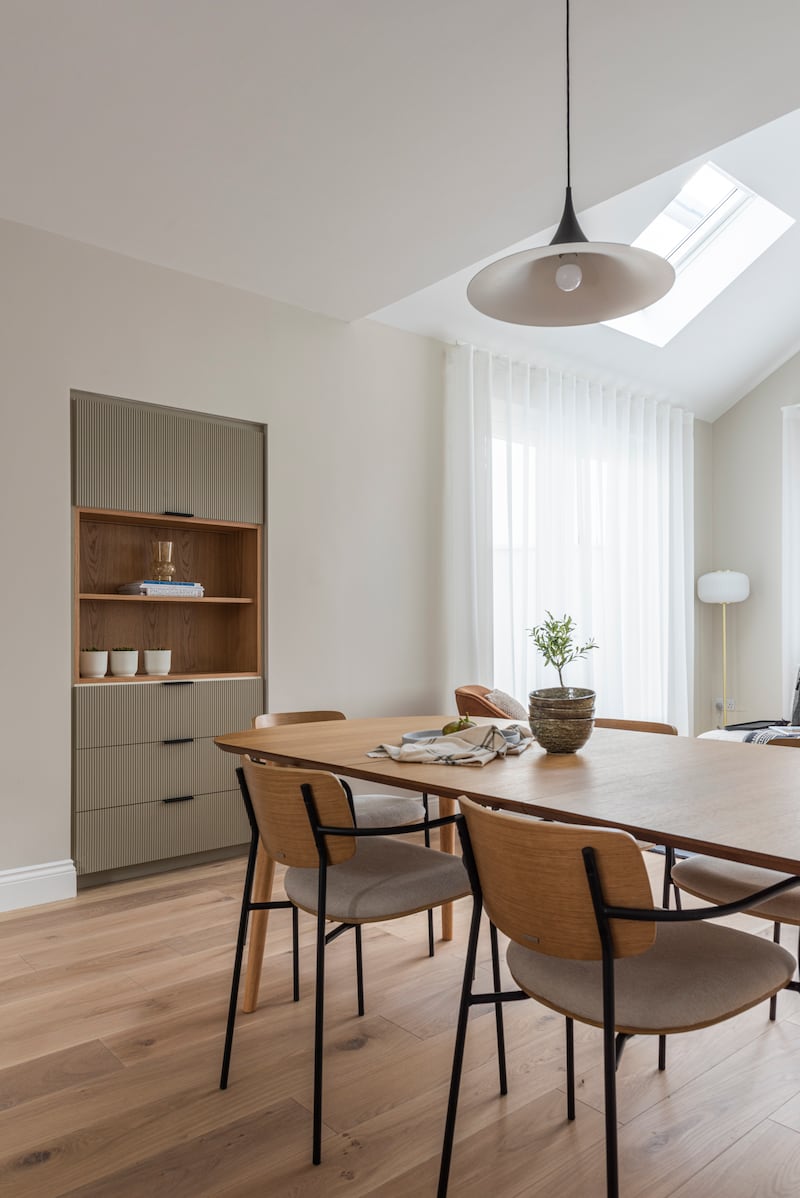
What makes a well-designed open-plan space so appealing is the sense of ease it brings to daily life. A good layout allows multiple activities to coexist without friction. Meals can be prepared while children work nearby; someone can read in a corner while someone else watches television. When it works, there is a harmony to it.
The challenge is that this harmony doesn’t happen by accident. It requires acknowledging that modern family life is multi-threaded. Cooking, eating, working, relaxing, studying, folding laundry and more are all part of the same domestic ecosystem. Open-plan can absorb all of it, but only if the space supports the different behaviours involved.
This is where micro-zones come into their own. A micro-zone is a small, intentional area within a larger room that is planned around a specific behaviour. It isn’t about styling, it’s about function. It’s the quiet infrastructure that allows different modes of living to share the same space without competing for the same surfaces.
In many ways, micro-zones are the evolution of the old idea that everything should have a place. They go a step further by giving activities a place as well. They consider how breakfast unfolds on a weekday morning when time is short. They consider how devices come into circulation in bursts and then need somewhere to charge. They consider how homework spreads across whatever flat surface it can claim, and how bags, coats, sports gear and pets enter and exit the room with their own rhythm.

Micro-zones
Micro-zones already exist in many homes that have been carefully considered. In newer kitchens, the “appliance garage” has become a regular feature. This is a storage area in the kitchen to keep the kettle, toaster and breakfast items contained rather than spread across the worktop. The larder cupboard or pantry performs a similar role for food storage and small appliances. Utility rooms and boot rooms extend this logic, absorbing coats, sports gear, laundry and cleaning supplies so that the main open-plan space can remain uncluttered.
[ From layout to lighting: an interior designer’s non-negotiablesOpens in new window ]
Elsewhere, micro-zones tend to be more improvised, but no less effective. A small desk or workstation can stop laptops and paperwork from permanently taking over the dining table or island. For those who work from home more regularly, a built-in solution with doors that can be closed at the end of the day helps create a clearer boundary between work and rest. Micro-zones can also play a quiet role in managing technology. Adding a power socket to the inside of a cupboard or drawer creates a discrete charging station for phones, tablets and laptops, reducing visual clutter and making it easier to step away from screens in the evening.
Micro-zones for pets are also becoming more common, with dedicated areas for feeding and storage so that bowls, food and leads aren’t constantly in circulation.
None of these interventions require building work. They require observation, and a willingness to plan the home around the way life actually unfolds rather than the way we imagine it should.
Daily life
Micro-zoning represents a level up in how we plan homes. It’s not about buying more storage or being endlessly tidy. It’s about understanding the rhythms of daily life and designing around them. Breakfast, homework, work calls, meal preparation, hobbies, exercise and rest all deserve a place to land. When they do, the home becomes supportive rather than demanding.
[ We’re planning to make our living space open-plan. Where do we start?Opens in new window ]
Open-plan is still deeply desired. But the first wave of open-plan gave us space without enough structure. The second wave, the one we are now entering, is about gentle boundaries, behavioural support and zones that serve the life lived inside the house rather than an idealised image of it.