
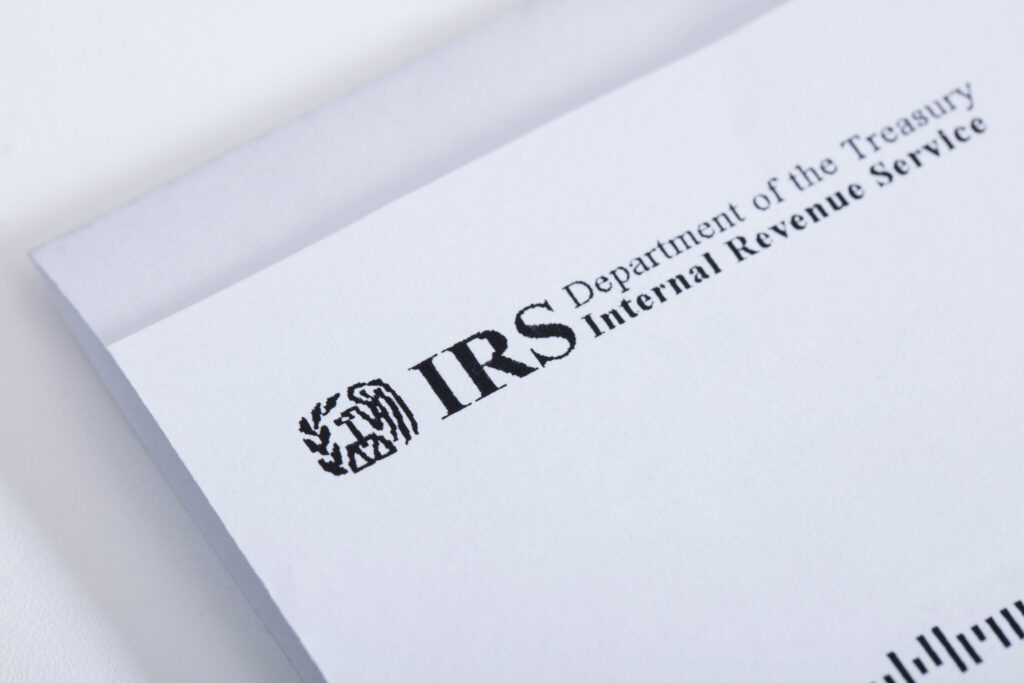


The Internal Revenue Service communicates almost exclusively through written, mailed correspondence, according to fraud experts. They urge heightened caution this tax filing season as scammers employ artificial intelligence to craft more authentic-seeming messages.
- Reports show a 62% increase in dark web chatter about tax scams in February, with scammers using AI to create convincing fake IRS messages and logos.
- Experts warn that the IRS will not contact taxpayers by text, social media or payment apps, and will never request cryptocurrency or wire transfers for tax payments.
- Consumers can help protect themselves from fraud by setting up transaction alerts, freeze credit with all three bureaus and verify tax preparers’ licenses before sharing personal information.
Every tax season, scammers try to part you from your money. And AI is making their job easier than ever.
It used to be a staple of “how to spot scams” advice: Typos, poor grammar and bad graphics were clear giveaways that a menacing message from the IRS was fake. But large language models like ChatGPT, Perplexity and Claude allow nefarious actors to clean up their language and generate near-perfect logos, letterhead and text. And spoofing technology makes it so phone calls look like they’re coming from the IRS. (Hearst, which owns the San Francisco Chronicle, has a partnership with OpenAI, which developed ChatGPT. AI was not used to create this story except for the named example at the end.)
Article continues below this ad
In addition to crafting more authentic-seeming messages, artificial intelligence is helping scammers synthesize information and identify targets, said Jonathan Polk, Visa’s regional risk officer for North America. So-called “spear phishing” attacks, where criminals target potential victims who have recently made a major financial change like buying a new home, are more sophisticated than ever.
It all makes the days of the crudely obvious foreign-prince scammer seem “quaint to remember,” he said.
Visa monitors activity on the dark web — hard-to-access corners of the internet where cybercriminals gather to plot, access marketplaces of illegal goods, and swap tips and tactics — and Polk said there is “cause for concern” about the volume of information there related to tax scams and AI. Dark web chatter about tax scams rose 62% in February from January of this year, according to Visa’s monitoring.
“Fraudsters are organized, they’re well-financed and they’re well-equipped,” Polk said. “It’s not a secret that they are leveraging the technology that we’re leveraging. That includes AI.”
Article continues below this ad
Criminals look to commit a few types of financial crimes around tax filing season. Some want to get hold of your personal identifying information, like what’s on your W2 and driver’s license, to steal your identity. Others want to impersonate the government to intercept your tax payment or claim your refund for themselves. Some might just want to take a fee for filing your taxes, or for giving you an advance on your refund, and run off with it, without delivering on their end.
Many are attempting some combination of these, if not all of them.
AI makes all of these types of scams more convincing: “It’s very easy to create an email, create a text, even voice cloning,” said Alma Galvan, the regional director of marketing and communications for the Better Business Bureau of the San Francisco Bay Area. And it can be done in any language the victim speaks.
So what can consumers do? At the end of the day, scammers still use the same tactics as they did before, said Larry Zelvin, the head of the financial crimes unit at BMO Financial Group. Typos aren’t the obvious tell they once were, but there are still signs you can look out for.
Article continues below this ad
Here are the red flags to watch out for this tax filing season.
Texts, emails, phone calls and social media
The Internal Revenue Service almost exclusively contacts people via snail mail, Zelvin said — unless they’ve sent many letters that have gone unanswered, at which point they might escalate to a phone call. The IRS will not text you. The IRS will not reach out over social media or third-party messaging apps.
The government also will not send you QR codes to scan or electronic links or attachments to open. And a government agent — or any legitimate actor on behalf of a government or financial institution — won’t ask you to read back the multifactor authentication code you just received so that they can “verify” your identity.
When it comes to communicating with the IRS, “generally speaking, people should be downright suspicious any time they get a communication through anything other than a letter that looks like one you would normally get from the IRS,” Polk said.
Article continues below this ad
And if the IRS does contact you, you’ll get a reference number for your case. You can go to IRS.gov, create an account if you don’t already have one, and enter that case number to verify what’s going on.
False urgency
Scammers create a sense of urgency to make potential victims anxious, which makes them more likely to act quickly without thinking through what they’re doing. The IRS doesn’t work that way, Zelvin said.
“It’s the government. It’s going to be slow,” he said.
Any message indicating a tight timeline to pay or respond is not coming from a legitimate government source. Phrases like “act now or…” “your refund is in jeopardy,” “final notice” when you’ve received no other notices, and any threats that indicate the police are about to show up at your home are signs of a fake message.
Article continues below this ad
“When they say you have a very limited time to act, it’s almost certainly some kind of a scheme,” Polk said. “The government just doesn’t move that fast. … They don’t participate in pressure campaigns.”
Cryptocurrency, wire transfers and other alternative payments
As of 2026, the U.S. government will not ever ask for your tax payment via Bitcoin, Ethereum, Solana, or any other 21st century cryptocurrency. The same goes for wire transfers, gift cards and payment apps like Venmo or Zelle, Galvan said.
‘Guaranteed refunds’
No tax preparer who hasn’t seen your records can guarantee in advance that you’ll receive a government refund. Decline to do business with anyone who promises you one.
Galvan recommended that before using any tax preparer in California, verify that they’re licensed in the state and do a quick check of their Google results and online reviews.
Other fraud-fighting measures
There are also things you can do proactively to protect yourself and your finances, as well as recourse if you think you’ve already been a victim of a tax scam.
• Set up alerts on your credit card and bank accounts.
• Freeze your accounts with all three credit bureaus.
• File an identity theft complaint at
You can even use AI to fight back, Polk said. If you get a suspicious-sounding message, throw it in the AI of your choice and ask if it sounds like a scam or a legitimate IRS communication. Running Visa’s dark web example through ChatGPT prompted it to generate a lengthy rundown of the many warning signs on display — though a check-in with a trusted friend, financial professional or tax attorney would be best.