
I watch a ton of movies. I try to find myself in a darkened theater a few times a week, and that means not everything I see is a banger.
And I bet this has happened to you, too.
You sit down ready to be swept away by the latest $200 million blockbuster, and yet, by the time the credits roll, you feel… nothing.
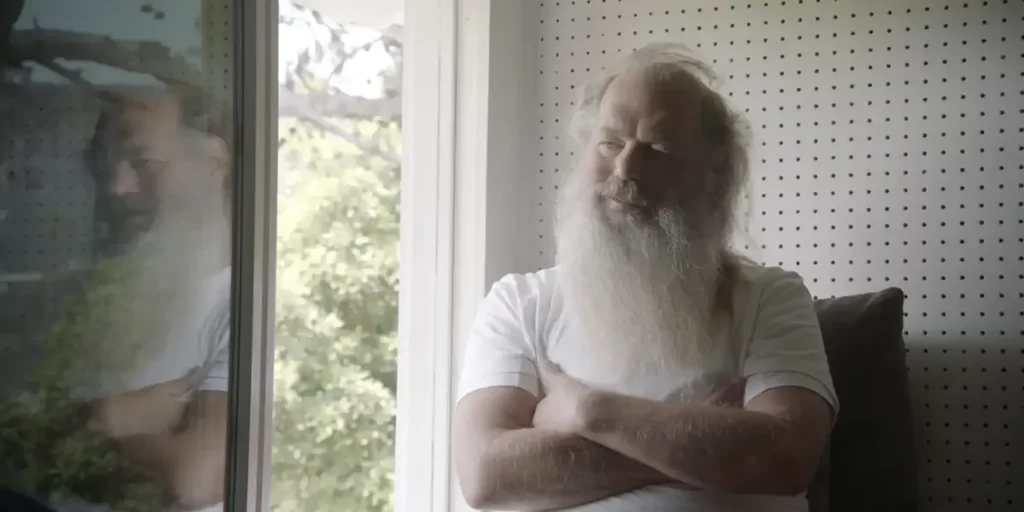
It’s a phenomenon we talk about constantly, but while we usually blame the death of the mid-budget movie or the over-reliance on IP, legendary music producer and creative guru Rick Rubin has a much simpler, more cutting explanation.
In a recent clip circulating online, Rubin laid it out plainly:
“So many big movies are just not good because they’re being made by people trying to make something they think someone else is going to like. That’s not how art works. That’s commerce.”
Let’s dive in.
The Trap of Audience
In the world of business, “customer first” is a gold standard you have probably heard over and over again. I worked at TGI Fridays, trust me, I know.
But as Rubin points out, that logic may work for a restaurant, but it’s poison for storytelling.
When a studio approaches a film by looking at four-quadrant data and trying to “engineer” a hit, they aren’t making art; they’re making a product.
That means there’s no life in it, you might as well be making widgets.
These execs are sitting in a room trying to guess what an imaginary audience might enjoy, which means they wind up creating something that is offensive to no one but inspiring to absolutely no one either.
Rubin’s philosophy, which he explores deeply in his book The Creative Act: A Way of Being, is that the artist is the first and only audience that matters during the creation process. If you don’t make it for yourself, how can you expect anyone else to feel a genuine connection to it?
Art vs. Commerce
I get it, movies are expensive. When there’s $100 million on the line, investors want a sure thing, and studio heads want to keep their jobs.
You don’t have to explain this to me. That’s why we see so many sequels, reboots, and formulaic Save the Cat plot beats.
But the irony is that the movies we actually remember, the ones that shift the culture, usually come from a place of singular, uncompromising vision.
This is all basic auteur theory. We want an author of the film who creates an emotional connection with the audience.
Think about the rise of A24 or the way a director like Christopher Nolan demands total creative control. These aren’t people trying to “guess” what you like; they are showing you what they like, and inviting you to come along for the ride.
That’s the dream everyone I know has who is trying to break in, they want their voice and their stories to hit the big screen and to connect with like-minded people.
When you try to please everyone, you end up pleasing no one. You lose the “soul”—that intangible spark that happens when a filmmaker takes a genuine risk.
How to Apply the Rubin Method
You don’t need a $100 million budget to fall into the commerce trap. Even indie filmmakers can get caught up wondering, “Will this get into Sundance?” or “Is this what TikTok wants to see?”
People see films as a stepping stone or just a way to cash in quick.
The truth is, they’re neither.
So how do you apply the Rubin rules to your own work?
- Write the “Selfish” Draft: Your first draft shouldn’t be for a producer or an audience. It should be for you. If you weren’t trying to sell it, what would you actually want to see on screen?
- Kill the Committee: Feedback is vital, but be careful who you take notes from. If a note is trying to make your movie more “likable” or “standard,” it might be stripping away the very thing that makes it unique.
- Focus on the Feeling, Not the Market: Rubin often talks about how he doesn’t know anything about music technically; he just knows how things feel. Apply that to your editing or your cinematography. Does it make you feel something? Or are you just following a “rule” you saw in a YouTube tutorial?
Summing It All Up
The industry is currently obsessed with algorithms and data-driven content, but those tools are rearview mirrors.
They will never be able to tell you where the industry is going or what they’ll be buying next year, or even next week.
If you want to make something that matters, you have to stop trying to read the audience’s mind and start looking at your own.
As Rubin says, the goal isn’t to be a “professional” who delivers a product; it’s to be an artist who shares a perspective.
Let me know what you think in the comments.