
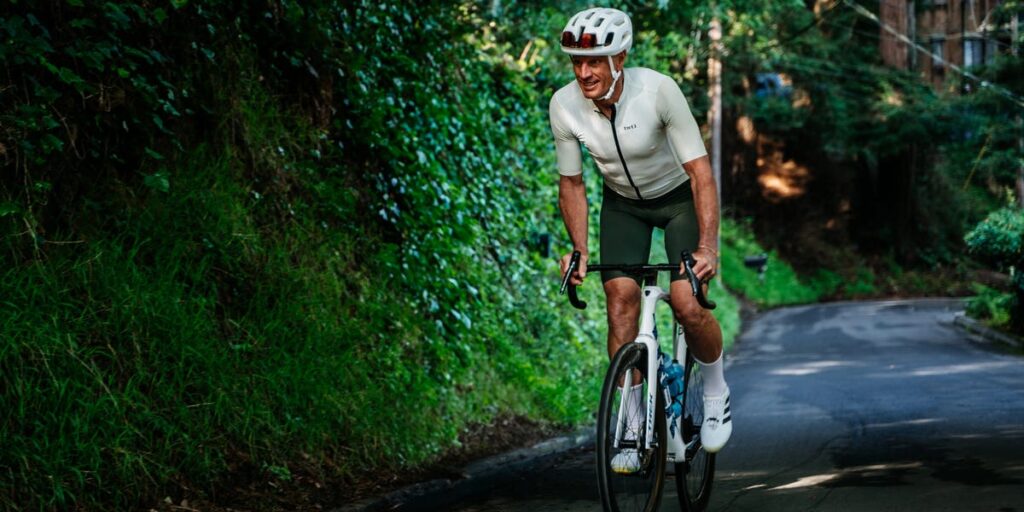


Some riders seem to float uphill. Their cadence stays smooth, their shoulders stay quiet, and they ride away from the rest of us like gravity got rewritten just for them.
I have never been one of those riders.
Even when I’m fit, and even when I’m light enough that I should be climbing better than I am, sustained uphill riding rarely feels natural.
And yet I love it.
Maybe that’s because climbing is the clearest place to see the gap between the rider I am and the rider I want to be. Maybe it’s because the payoff is so clean: a summit, a view, a descent, that private little feeling of having done something hard. Whatever the reason, I keep coming back for more.
Because climbing has never been easy for me, I’ve had to get better at it the stubborn way. Not by transforming myself into a gifted mountain goat, but by figuring out a handful of practical strategies that help me manage the effort and keep moving. These are the tricks I rely on when the road tilts up—whether it’s famous paved monsters such as Hautacam, Alpe d’Huez, and Haleakalā, or some ugly gravel or mountain bike climb that just keeps asking tough questions.
Believe in Yourself
Climbing is physical, obviously. But it is also mental in a way that still surprises me.
A climb can make you doubt yourself fast. The grade kicks up, your speed drops, and suddenly your brain starts offering bad ideas. Maybe today isn’t the day. Maybe you’re underfueled. Maybe you should stop. Maybe you’re not made for this.
Sometimes those thoughts are useful. Often they’re just noise.


When that noise starts up, I try to remind myself of one simple thing: I’ve been here before. I’ve felt cracked before. I’ve thought I was right on the edge before. And most of the time, I still had more than I thought.
That doesn’t mean you need to override every warning sign and grind yourself into paste. It means not mistaking discomfort for defeat. If you need to stop, stop. If you need to walk, walk. Take a photo. Take a drink. Reset. There’s no shame in managing the climb however you need to manage it. The point is to keep the challenge in perspective and not let one bad minute convince you the whole thing is over.
Have a Mantra
This is going to sound a little silly. I know. I don’t care. It works. A short phrase can help when the climb stops being merely physical and starts turning mental, too.
Mine changes depending on the day, but the job is always the same: cut through the mental clutter and keep me focused on the next bit of work.
Sometimes I go with something blunt and dumb like, “pain don’t hurt” (shoutout James Dalton).
Sometimes it’s, “Stronger, lighter, faster.” The exact words matter less than the rhythm of repeating them. A mantra gives your brain something useful to do when it would otherwise spiral.


Think Small
One of the easiest ways to crack on a big climb is to let yourself get overwhelmed by thinking about the whole thing at once.
Hours of climbing is a terrible thing to contemplate when you’re already hurting. So don’t.
Break the climb into smaller, manageable pieces. Ride to the next turn. Hold your rhythm to the next sign. Stay smooth for the next five minutes. Get over the steep ramp ahead without spiking your effort. Repeat.
This sounds basic because it is basic. It also works. Big climbs become more manageable when you stop trying to emotionally process the whole mountain and deal instead with the piece of road directly in front of you.


Protect Your Momentum
On steep climbs, especially the ones that pitch up suddenly or tighten in corners, losing momentum can feel catastrophic. You don’t have much speed to spare to begin with, and once it bleeds away, getting it back costs a lot.
So I try to ride a little ahead of the road. I choose lines through switchbacks that help me hold my speed, and I shift often to keep my cadence and torque in a comfortable range. I stay seated when I can, but I also stand and pedal regularly to give my butt and perineum a break and take some pressure off my back.
None of this is sexy or game-changing. It simply helps keep a climb from becoming a string of crises—borked shifts, cadence collapses, panic accelerations, near-stalls. And that matters. Climbing is already hard. There is no reason to make it harder with sloppy riding.
Use a Power Meter—or Another Pacing Tool
If I had to name one thing that has made me a smarter climber, it would be a power meter.
When I’m feeling good, I tend to start too hard. When I’m feeling flat, I sometimes ride easier than I need to. Power gives me both a ceiling and a floor. It reminds me what I can realistically sustain for a long effort, and it keeps me from making dumb early decisions I’ll pay for later.
If you don’t have a power meter, there are other pacing tools. Heart rate can help. So can rate of perceived exertion (RPE). So can simply paying attention to your breathing and asking whether the pace you’re riding right now is one you can still live with 20 minutes from now.
The point is not the device. The point is resisting the urge to climb by emotion—to surge because the road kicks up or because you feel strong for a minute—instead of pacing the effort so you can make it to the top and still have legs for the rest of the day.

Stay on Top of Food and Water
Climbing makes it easy to forget basic nutrition and hydration practices.
You’re working hard, moving slowly, cooking a little more than you would on flat ground, and focusing so much on the effort that eating and drinking can start to feel optional. They are not optional.
If I know a long climb is coming, I try to start it fed and reasonably hydrated, not already behind. Then I keep nibbling and drinking instead of waiting until I feel empty. That is the trap. Once you feel wrecked, you’re not fixing the problem in real time. You’re just beginning the slow, miserable process of cracking.
If you haven’t experimented with high-carb fueling yet, do it. It can make a noticeable difference on long climbs, and it can help keep you from cooking yourself so thoroughly that the damage follows you into the next day. Remember: You’re not just fueling the ride you’re on. You’re also fueling the ride that comes after it.


Protect Your Skin
I also take sun protection seriously. A bad sunburn is not just a cosmetic problem. It’s an acute inflammatory injury to your skin, which means your body has one more dumb repair job to deal with on top of the riding you actually meant to do.
And no, sunscreen itself does not appear to sabotage cooling. A 2024 Journal of Applied Physiology study found that mineral and chemical sunscreens did not reduce sweating or make people overheat during exercise in the heat.
So I’m aggressive about sun protection. Broad-spectrum sunscreen. Reapply it. Cover up when the sun is savage. On long, exposed rides, I’d rather wear a light long-sleeve jersey than count on sunscreen alone. This is not vanity. It’s part of managing the day well, and setting yourself up to recover better for the next one.


Get a Bike Fit
A good bike fit can matter everywhere, but I feel its benefits most on long climbs.
When the road goes up for a long time, small inefficiencies stop being small. If your position makes it harder to breathe well, recruit your glutes, or stay comfortable while seated and spinning, a long climb will expose it. A better fit will not magically turn you into a better climber. But it can make it easier to use the fitness you already have.


Gravel gears made my climb up the Hautacam more pleasant.
Don’t Let Your Ego Pick Your Climbing Gears
This is one a lot of riders need to get over.
Cyclists can be strangely stubborn about easy gears. I used to be, too. Then I spent enough time on big climbs to realize I’d much rather spin out on a descent than run out of gear halfway up a mountain.
These days, I’m a big believer in low gears. A sub-1:1 bailout gear is not an admission of weakness. It’s a tool. It helps you keep your cadence up, stay seated longer, manage fatigue, and reach the top feeling like a rider instead of a crime scene.
Last summer, I spent 10 days riding some of the most famous climbs in the Pyrenees. Even though I showed up in good shape, I had no shame about bringing a bike with what my traveling companions jokingly called “gravel gearing”: a SRAM Force AXS drivetrain with 46/33 chainrings and a 10-36 cassette. That gave me a sub-1:1 low gear, and I used it plenty.
This matters even more when your ride includes multiple major climbs, or multiple hard days in a row. Plenty of riders are strong enough to muscle too-big gears up the first climb. That doesn’t make it smart. It just means they’re borrowing trouble from later in the day.

These tips helped me successfully tackle some of the world’s most famous climbs.
What Actually Gets Me to the Top
I will never be a natural climber.
But I’ve stopped caring so much about that.
The trick is not becoming the rider who dances uphill without thinking. It’s figuring out how to work with the rider you actually are—your strengths, your weaknesses, your habits, your tendency to panic a little when the grade turns ugly—and building a system that gets you to the top anyway.
That has been enough for me. More than enough, really.
Because when I do reach the summit, after all the bargaining and breathing and gear changes and muttered little pep talks, it still feels great. Maybe better because it never came easy.


A gear editor for his entire career, Matt’s journey to becoming a leading cycling tech journalist started in 1995, and he’s been at it ever since; likely riding more cycling equipment than anyone on the planet along the way. Previous to his time with Bicycling, Matt worked in bike shops as a service manager, mechanic, and sales person. Based in Durango, Colorado, he enjoys riding and testing any and all kinds of bikes, so you’re just as likely to see him on a road bike dressed in Lycra at a Tuesday night worlds ride as you are to find him dressed in a full face helmet and pads riding a bike park on an enduro bike. He doesn’t race often, but he’s game for anything; having entered road races, criteriums, trials competitions, dual slalom, downhill races, enduros, stage races, short track, time trials, and gran fondos. Next up on his to-do list: a multi day bikepacking trip, and an e-bike race.