
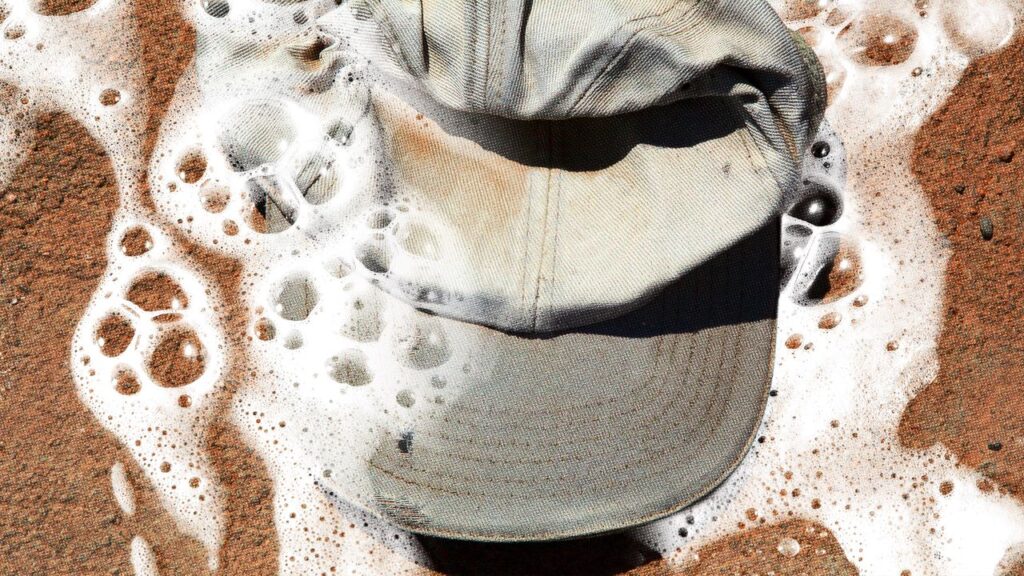
A good hat gains character as it ages. Dad hats with muted colors and worn leather straps, vintage ball caps with faded stitching and sun spots from summer days at the park—like other clothing, the imperfections can become part of the charm.
But hats are not like other garments when it comes to washing. Clean a cap wrong and you risk ruining it. Different hats, different ways to destroy them in the name of cleanliness. And when you’re dropping upwards of $50 for a standard-issue MLB ball cap—to say nothing of the three-figure designer models out there—that’s not just unfortunate, it’s costly.
How (and why) hats get ruined
It’s pretty easy to ruin a hat, and a lot of that comes down to structure. The anatomy of a baseball cap varies, with some built to withstand years of wear and others far more fragile than they look. Modern hats often use plastic in the brim, which tends to hold its shape better when exposed to water and heat.
Older hats, like vintage truckers or promotional caps from the ’70s or ’80s, can be a different story entirely. Many used cardboard or paperboard for the brim, both of which can warp, split, swell or permanently lose shape once soaked.
Some corners of the Internet will claim that the top shelf of the dishwasher is the safest place to clean a hat, and that may work for some styles, especially modern hats with plastic brims and stitched logos. But Ezra Watson—a professional hat restorer and the owner of Old Boy Vintage in Bend, Oregon—warns against machine washing as a general rule, especially if you’re not certain about how the hat is constructed.
“People throw hats in the washer or even the dishwasher, which is honestly the worst thing you can do,” he says. “Hats aren’t built to be tossed around like regular clothes. The spinning and tumbling can distort the crown, mess up the brim shape, crack graphics and break down older materials.”
Heat, moisture, and agitation in some combination are usually the culprits, making washing machines and dishwashers a particularly risky play. You might not even notice at first. A hat may seem fine straight out of the laundry, only to dry misshapen hours later.
“If someone already used the machine, the best thing is to reshape it while it’s still slightly damp,” advises Watson. “Don’t let it dry all twisted… gently bend the brim back into shape by hand and let it dry on something rounded so the crown keeps its form. Sometimes you can save the fit pretty well if you catch it early enough. Once a brim fully dries warped, though, it gets a lot harder.”
The proper way to clean and dry a hat
Ezra’s principle of “less is more” applies to all hats, regardless of material. So first, inspect. What is the hat made of? How and where is it dirty? Could a spot wash take care of it? If so, it’s a safe place to start.
“I always say start as light as possible, spot clean first, cold water only and use something mild,” he says. “No bleach, no heavy chemicals. A lot of times people go too hard scrubbing and end up damaging the fabric or cracking the print.”
Another crucial step of the process where hats commonly get destroyed is drying and reshaping. Ezra advises doing the reshaping by hand immediately after cleaning and only ever letting hats air dry. Do not use the laundry or toss it in the sun and expect to reform it to your head after it’s dry. One way to help a wet hat retain proper form is to let it dry over something round like a bowl or ball.