
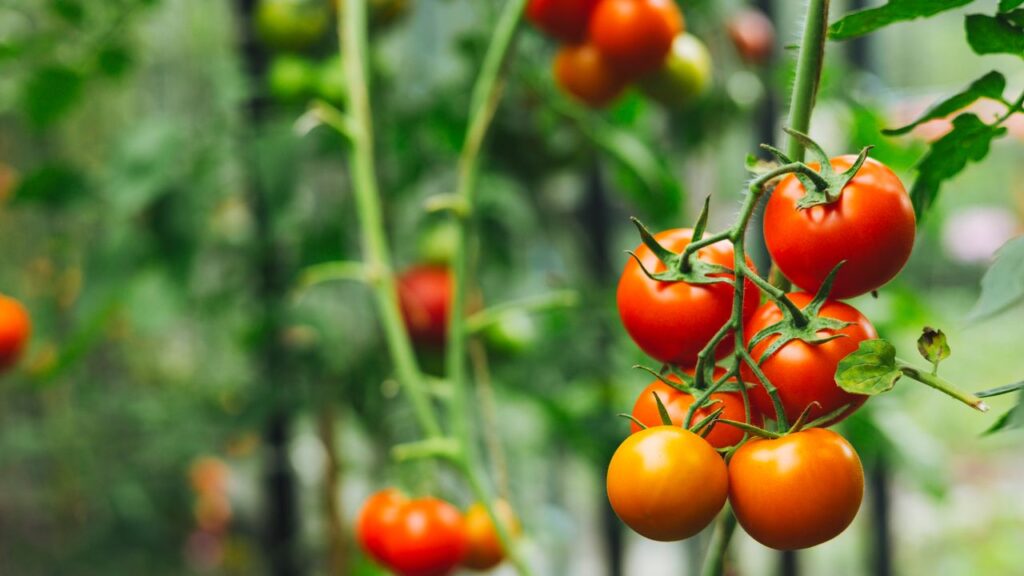
A BLT tastes even better when the T is fresh, and you can’t beat the freshness of food straight from a home garden—if you know how to grow tomatoes. Yes, these red, yellow, orange, and sometimes multicolored beauties thrive in raised beds and greenhouses, but you can easily grow them in a container on a patio. Get ready for the real Tomato Girl Summer.
The number of tomato varieties can be overwhelming, but you it’s hard to go wrong. Amy Pallenberg, landscape designer and owner of Harvest Garden in Nantucket, Massachusetts, recommends home gardeners opt for a good cherry tomato, like Sungold, a sweet, bite-size option. Or you could branch out with heirloom varieties such as Cherokee Purple or Brandywine, which are legacy plants with unusual flavors and shapes.
Read on for our simple rundown on how to grow tomatoes—even if you don’t think you’re cut out to be a farmer. Don’t be surprised if your harvest leads you to a new canning hobby.
How to grow tomatoes
Step 1: Pick your tomato varieties
Tomatoes are separated into two different categories: determinate and indeterminate. “Determinate varieties produce their fruits on the growing tips, causing the branch to stop production once the fruit has set,” says Bruce J. Black, horticulture educator at the University of Illinois Extension in Sterling, Illinois. These include Roma, the Mountain series, and Cherry Gold. All are common for container gardening or small spaces (we’re looking at you, Brooklyn balcony) because you probably don’t need to use a trellis or stalk. Indeterminate tomatoes, the traditional vining plants, grow all season and produce fruit on side branches. “These are often larger plants that require more space and some type of trellising system,” Black explains.


Thanks to their resistance to low temperatures, these plants will keep your home lively and colorful no matter the month
Step 2: Decide if you want to seed or plant from a seedling
Gardeners who start tomatoes from seed need to do so in early spring by placing seeds into small containers, which are kept inside until they sprout. “When starting from seed indoors or outdoors, it’s important to have good soil temperature—at least 70 degrees—to germinate tomatoes, and to use a clean container with germination mix instead of garden soil,” says Pallenberg. Leave the potting mix out of this.
Alternatively, you can buy a small potted tomato plant from a nursery or garden center. These are approximately four to eight weeks old and can be placed directly into your garden. “An established plant will start blooming quickly and offer fruits earlier,” says Pallenberg. You can seed directly into the ground, but the soil needs to be warm, and the harvest will be later in the summer.
Step 3: Water regularly
Your tomato seed container should have drainage holes, or you can use a cardboard egg crate. Plant the seeds about ¼-inch deep, and water regularly once the seeds germinate. “Allow them to dry out in between watering for building a resilient plant,” Pallenberg adds.
Step 4: Transplant tomatoes
Once the weather is warm and there is no threat of frost, replant your seedlings outside in soil, a raised bed, or a large pot. Find a spot that offers full sun for at least six to eight hours. Be careful not to overcrowd your plants; it’s good practice to have plant spacing of 24 to 36 inches to create proper air circulation, which can minimize disease. “The key to planting a tomato is to pinch off the lower foliage that is close to the bottom of the plant, and to bury the plant deeper than normal. Plant six inches deeper so the stem is buried a bit,” Pallenberg says. “Doing this doubles the root mass to make a strong, faster-growing plant.