
The season of egg-laying for turtles has begun, and a turtle biologist at New Hampshire Fish and Game talked to News 9 about some important tips to keep in mind. Turtles are out and about, often crossing roads to their nesting areas. Josh Megyesy, the state turtle biologist, says if you find a turtle crossing the road, make sure you bring it to the side where it was originally headed.If you move the turtle back where it came from, Megyesy says it may try to cross back again. “If it’s a snapping turtle, you just have to be careful. You want to pick them up by the back of their shell and move them along or put them on a tarp or a car mat or something and you can drag them across,” Megyesy said. “But you don’t want to pick them up just by their tail, because it can actually separate the vertebrae on their tail and injure them.”He said turtles like to make nests in sandy areas with lots of sunlight. If you spot a turtle laying eggs and think the nest needs to be protected, you can put some wire around it. Megyesy said to just make sure the wire is grounded with tent stakes, so raccoons don’t pull it out of the sand. It is also important to only leave an enclosure in place for a few days to a week so that the hatchlings are eventually able to get out of the nest on their own. In the event that you spot an injured turtle on the roadway, Megyesy told News 9 you should report it to the state’s turtle rescue and to Fish and Game.
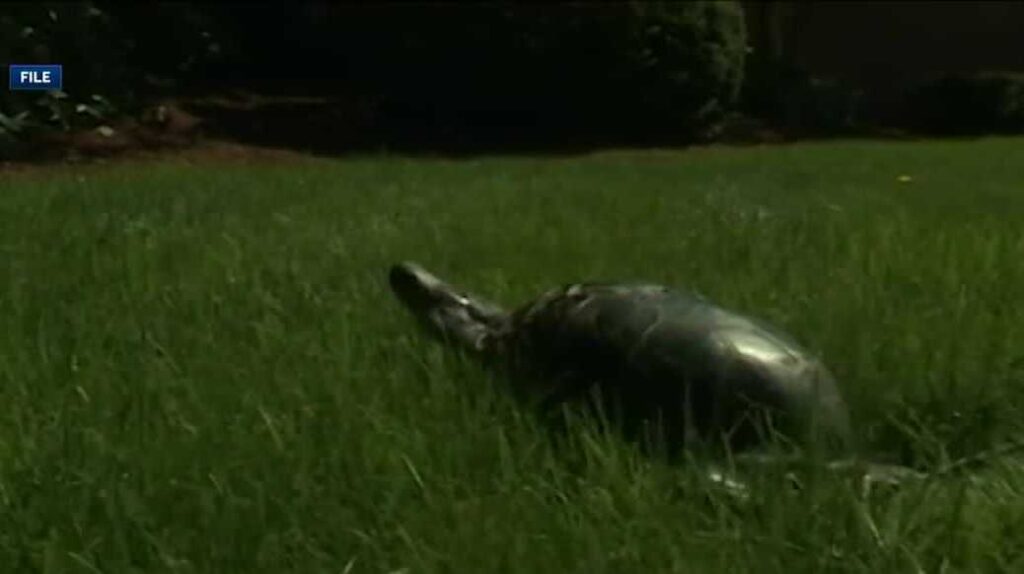
The season of egg-laying for turtles has begun, and a turtle biologist at New Hampshire Fish and Game talked to News 9 about some important tips to keep in mind.
Turtles are out and about, often crossing roads to their nesting areas. Josh Megyesy, the state turtle biologist, says if you find a turtle crossing the road, make sure you bring it to the side where it was originally headed.
If you move the turtle back where it came from, Megyesy says it may try to cross back again.
“If it’s a snapping turtle, you just have to be careful. You want to pick them up by the back of their shell and move them along or put them on a tarp or a car mat or something and you can drag them across,” Megyesy said. “But you don’t want to pick them up just by their tail, because it can actually separate the vertebrae on their tail and injure them.”
He said turtles like to make nests in sandy areas with lots of sunlight. If you spot a turtle laying eggs and think the nest needs to be protected, you can put some wire around it. Megyesy said to just make sure the wire is grounded with tent stakes, so raccoons don’t pull it out of the sand.
It is also important to only leave an enclosure in place for a few days to a week so that the hatchlings are eventually able to get out of the nest on their own.
In the event that you spot an injured turtle on the roadway, Megyesy told News 9 you should report it to the state’s turtle rescue and to Fish and Game.