How Genes Have Harnessed Physics to Grow Living Things
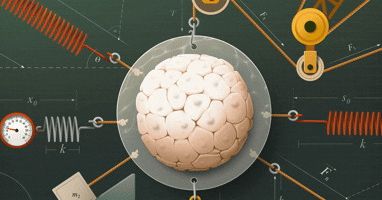
The original version of this story appeared in Quanta Magazine. Sip a glass of wine, and you will notice liquid continuously weeping down the wetted side of the glass. In 1855, James Thomson, brother of Lord Kelvin, explained in the Philosophical Magazine that these wine “tears” or “legs” result from the difference in surface tension […]
Unpicking How to Measure the Complexity of Knots

The duo kept their program running in the background for over a decade. During that time, a couple of computers from their ragtag collection succumbed to overheating and even flames. “There was one that actually sent out sparks,” Brittenham said. “That was kind of fun.” (Those machines, he added, were “honorably retired.”) Then, in the […]
How to Make AI Faster and Smarter—With a Little Help from Physics

What exactly is AI Scientist—just a fancy kind of neural net? It’s not a single neural network, but rather an ensemble of computer programs that can help scientists make new discoveries. My group has already developed algorithms that can help with individual tasks, such as weather forecasting, identifying the drivers of global temperature rise, or […]
Everything You See Is a Computational Process, If You Know How to Look

The original version of this story appeared in Quanta Magazine. In the movie Oppenheimer, Niels Bohr challenges the physicist early in his career: Bohr: Algebra is like sheet music. The important thing isn’t “can you read music?” It’s “can you hear it?” Can you hear the music, Robert? Oppenheimer: Yes, I can. I can’t hear the algebra, […]
Google’s Chess Experiments Reveal How to Boost the Power of AI
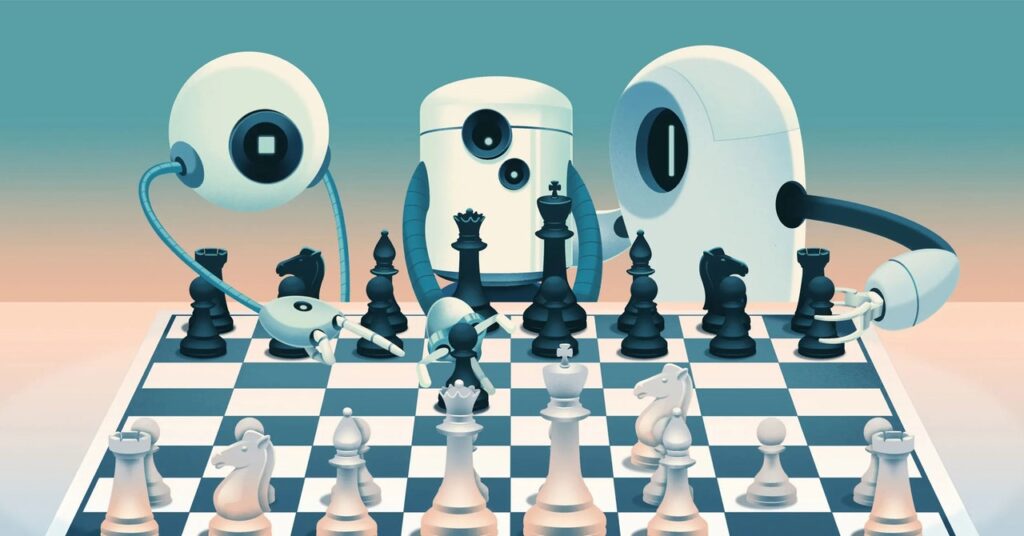
His group decided to find out. They built the new, diversified version of AlphaZero, which includes multiple AI systems that trained independently and on a variety of situations. The algorithm that governs the overall system acts as a kind of virtual matchmaker, Zahavy said: one designed to identify which agent has the best chance of […]