
You’re probably thinking “how bad could that possibly be?” The answer was fairly alarming.
I’d estimated we spent on average about $50 a month at the chemist. With two small boys who kindly bring us home every bug known to man, Pamol and Vicks feature heavily, particularly in winter.
But when I totted up what we actually spent, I was shocked.
In three months, we’d spent $687 – that’s an average of about $229 a month, or more than four times what I’d planned to spend. (Those numbers are also from summer, so I can’t blame winter ailments!)
I realised I’d fallen victim to the same trend I’ve previously seen with clients – most thought they spent an inconsequential amount at pharmacies, but the data consistently proved otherwise.
Why is the chemist a place that I can’t seem to go into without dropping $80? Or, in the most recent case – $182! (enough for a full tank of petrol … almost).
Sure, $5 prescription charges can add up and hay fever remedies and cough syrup can be pricey, but that’s not where the blowout happens.
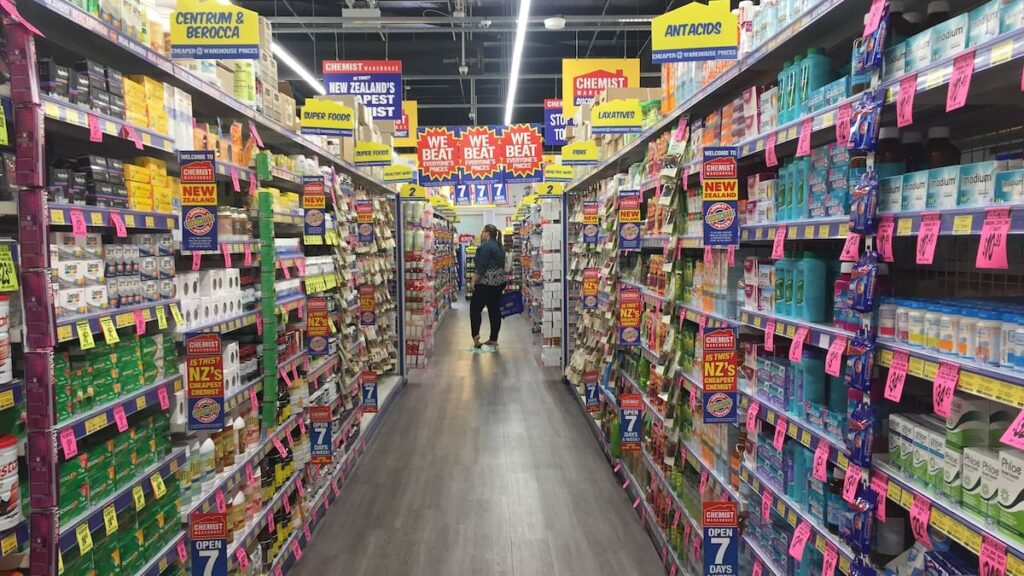
The real trap is everything you walk past to get to the dispensary, which is always at the very back.
You’ve got to go past the ashwagandha tablets that promise to support you during “times of stress”; past the viral defence tablets to “support your immune system”; past the CoQ10 that promises energy (which, to me, looks like an oasis in the desert). Oh and don’t forget to drag your tired, ageing eyes past the collagen gummies, the collagen hot chocolate/powder/masks/creams/serums – all promising some version of a better you.
If you tend to go to the big-box style of chemist, the aisles are littered with discount stickers. Everywhere you look, there are screens with healthy and well-rested-looking celebrities promoting the miraculous properties of something or other. It’s a struggle to find what you’re looking for, so you end up trawling the aisles for ages. It’s an assault on the senses and I swear it’s what nudges you to part with more cash than you planned to.
If you’re entering the place a little under the weather – which is not unreasonable if you’re there to collect a prescription – you’re perfectly primed for the suggestion that there may be an easy way to feel better.
The mere presence of regulated medicines – prescribed and dispensed by highly trained professionals – lends a halo of scientific credibility to everything else on the shelves.
When you feel tired, run-down, stressed or slightly anxious about your health, doing something – buying something – is hardly irrational. It feels better than doing nothing.
But it’s the leak in your spending you’re probably overlooking. So, what can you do about it?
Go small
The big-box pharmacies carry more products and spend more on advertising and influencers so there is more temptation and more in-your-face tactics to entice you into spending. They accounted for all my biggest chemist bills, while those at my wee local chemist down the road were typically $5-$25, tops.
Sure, the big guys may have many products at a steeper discount, but if they also convince you to part with more of your cash than you intended to while you’re there, those savings are a mirage.
Visit less often
You know how you somehow walk out of the supermarket with a full basket despite only going in for “one thing”? The chemist can elicit the same response – the easiest way to combat that is to visit less frequently.
Be sceptical
At its worst, the wellness industry exploits our insecurities, but it must dance a fine line doing it.
Alarmingly, Medsafe’s website says there is no pre-approval process for dietary supplements.
Supplements sit in a grey zone – regulated more like food than medicine and under rules that are outdated.
However, supplements can’t legally claim to prevent, treat or cure illness – so instead you’ll see words like “boosts”, “supports” or “helps maintain” your gut/immunity/sleep/stress.
That kind of vague language should be a red flag to investigate more.
Get tested
To be clear, some supplements are useful – even essential – if you actually need them.
But to know what you need, you need to know what you’re lacking – so getting some blood tests is a good first step.
If I’m honest, I think I enjoy the idea that a few powders or tablets could solve all my sleep/energy/appearance anxieties. But I also know I’m often not buying a solution but a bottle of well-marketed, carefully worded hope.
And it turns out that hope doesn’t come cheap.
Catch up on the debates that dominated the week by signing up to our Opinion newsletter – a weekly round-up of our best commentary.